Hello and welcome to Commander Bites!
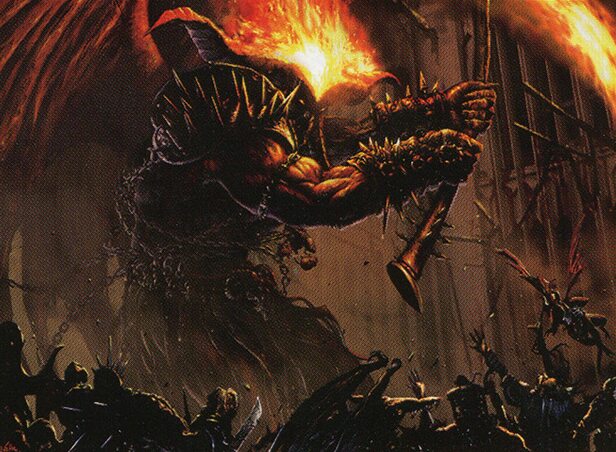
Today we are going to be taking a look at Rakdos, Lord of Riots!
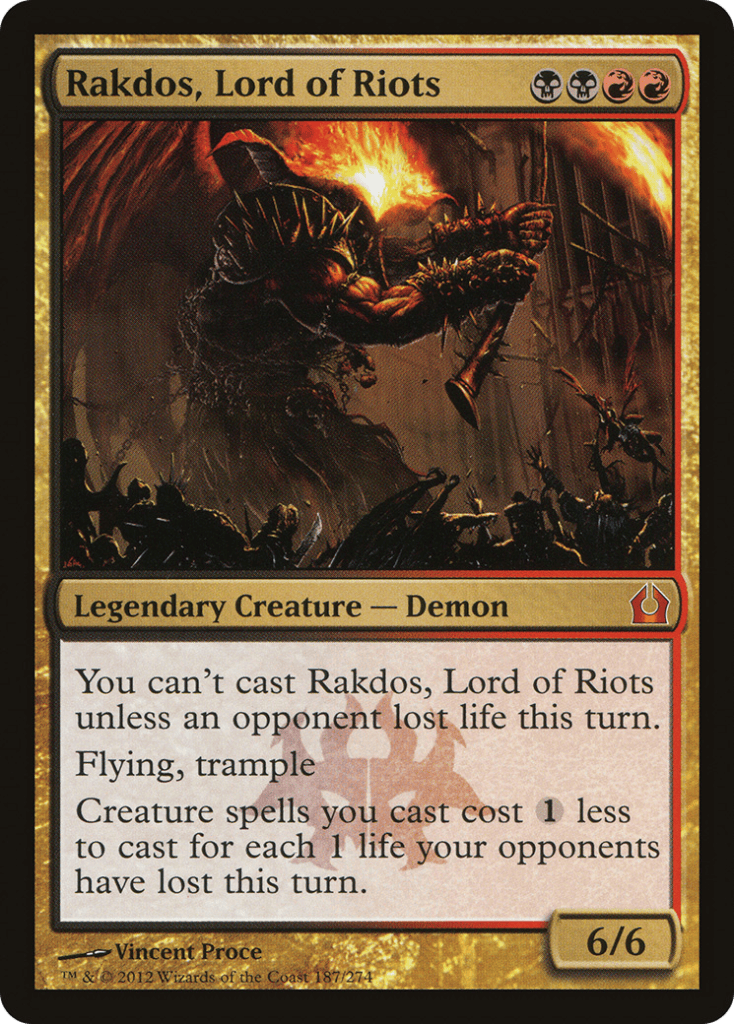
Rakdos is a four mana 6/6 with flying and trample that can’t be cast unless an opponent lost life this turn, and creature spells you cast cost one mana less to cast for each 1 life your opponents have lost this turn.
Game Plan
Rakdos has a good number of variations, with this particular version wanting us to deal damage to our opponents in order to cast them in the first place while also being the cheapest of the variations to cast.
The best thing about this Rakdos is that the cost reduction counts for all opponents and lasts until the end of turn, meaning that if we manage to deal at least 1 damage to each of our opponents, then we get a three mana discount on all our creature spells. So in order to get the cheapest big creatures we can, we need to do a lot of damage.
Support
For the early game we need ways that we can consistently do damage to an opponent so that we can get Rakdos in play while also being able to accumulate any sort of discounts.
Something like Spear Spewer comes to mind because it is a one mana creature that can tap to deal 1 damage to each player, which does tag us and doesn’t count for the discount but it is a cheap pinger that can get things started.
A better option would be cards like Thermo-Alchemist which can tap to deal 1 damage to each opponent but whenever we cast an instant or sorcery spell we can untap it, meaning that we can cast a couple of cantrips to reset the Thermo-Alchemist in order to get a couple more bits of damage to get a bigger discount.
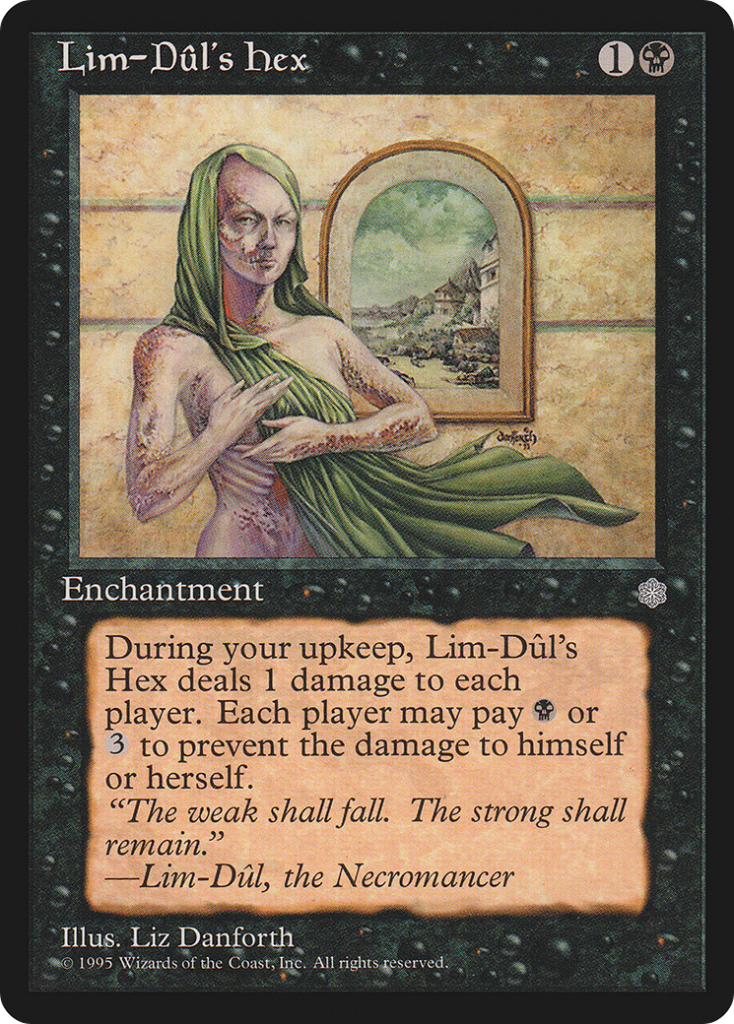
Lim-Dul’s Hex is an old school pull where at the beginning of your upkeep Lim-Dul’s Hex deals 1 damage to each player unless they pay a black mana or three mana to prevent that damage. While not as annoying of a tax effect as a Rhystic Study, most people who don’t have access to black mana will not pay the three mana, and even people who do have access to black mana may not want to pay it anyway.
If you want a massive swing of damage, then Heartless Hidetsugu can help by tapping to deal damage to each player equal to half of that player’s life total, rounded down. Even after our opponents will have taken some amount of damage, we will still get well over 30 damage done for a massive creature discount.
With that, we have a good number of creatures at our disposal that we can now cast and the bigger the life swings, the bigger the creatures. If you manage a massive swing with Heartless Hidetsugu, then using it to cast a Walking Ballista to deal a good chunk of damage can really help us.
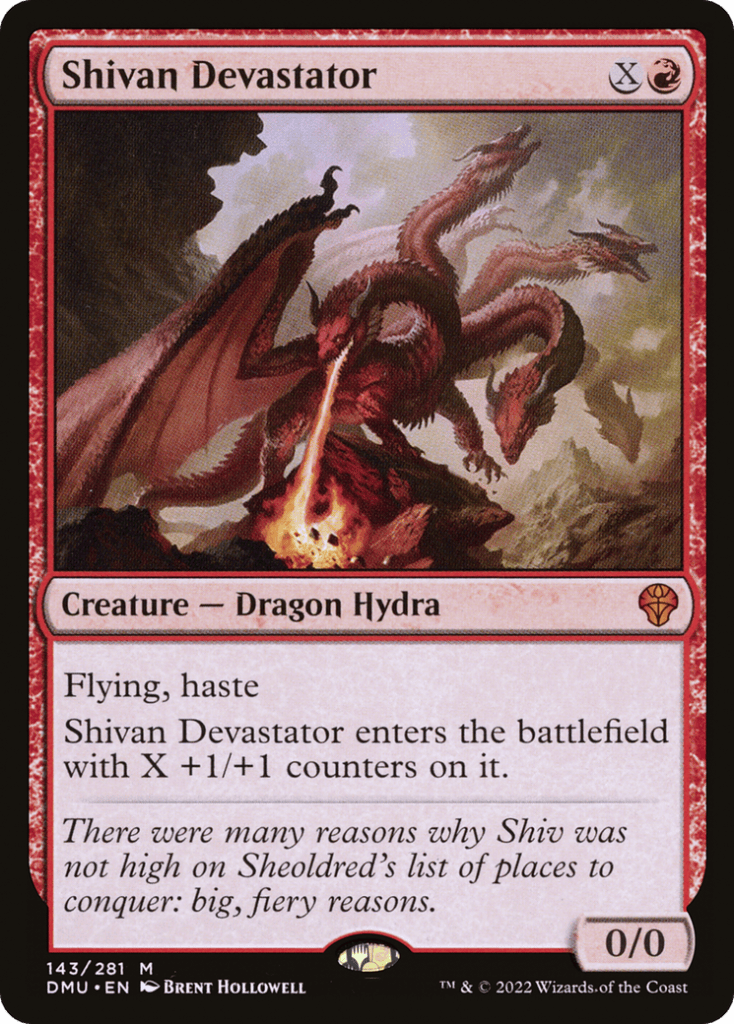
Even not using that, Shivan Devastator can be used as a way to get a massive evasive creature that enters with X +1/+1 counters on it to swing in and get one player out of the game if we manage to get an average discount.
Some of the non-X cost creatures we can cast can also be very helpful, like Archfiend of Despair which can prevent our opponents from gaining life and at the beginning of each end step each opponent lose life equal to the life that player lost this turn, which can just win us the game after a Heartless Hidetsugu.
It would also be remiss of me to not mention the Eldrazi that we would be able to get out. Cheating out one of the Eldrazi can help take another player out of the game or solidify us in a game winning position. If I had to pick one, I would personally choose Ulamog, the Infinite Gyre for immediate removal, an indestructible body, and the annihilator 4 to help close out the game.
Setbacks
While we are perfectly solid with the massive discounts on the creature front, not having that discount on our noncreature spells is less than ideal.
If we did have the discount that Rakdos provided on our noncreature spells then we would have access to a bunch of massive X spells that can act as finishers, but since we are limited to only creatures, then we need to have more supplemental pieces for our noncreature card suite.
This also means that a lot of the time we are not doing much on other players turns because while there are some solid creatures in our colors that have flash, they are already fairly cheap to cast. Unless we have a Vedalken Orrery and make sure we can deal damage to our opponents on their turn, a majority of what we are doing is going to be on our turn.
What’s more, we need to make sure we can secure ourselves in a solid position of being able to do repeated damage because if our board is cleared and it comes to our turn and we don’t have a way to cast Rakdos because of the restriction, our deck takes a long time to do anything.
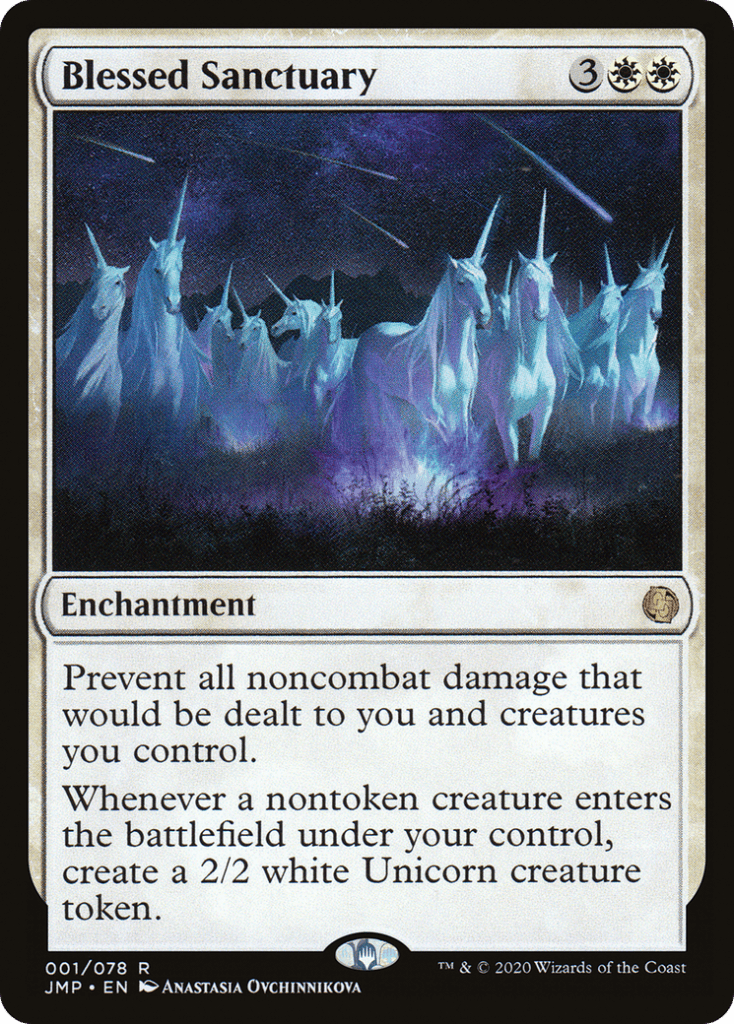
What makes things worse is if an opponent plays a card that prevents noncombat damage like a Blessed Sanctuary, which may not happen often, but it is still a concern to be aware of because that can dramatically reduce the effectiveness of our deck.
Rakdos relies on damage to be able to come into play as early as possible, which is why the mana cost is so low in comparison to the other versions of Rakdos, so we need to make sure that we can get damage dealt as soon as possible and as reliably as possible.
Bracket Rating: High 3, Low 4
I think that if you manage to get enough early and reliable damage dealing, Rakdos can be a pretty formidable Commander.
While Rakdos may struggle having to do a majority of the things that they want on their turn, it is not difficult to deal a small amount of damage to each opponent that accumulates into a massive discount that can bring out some massive threats that can potentially win the game, or at the very least put you ahead of each of your opponents.
Thank you for reading, see you all tomorrow!
Peace,
From, J.M. Casual





Leave a Reply