Hello and welcome to Commander Bites!
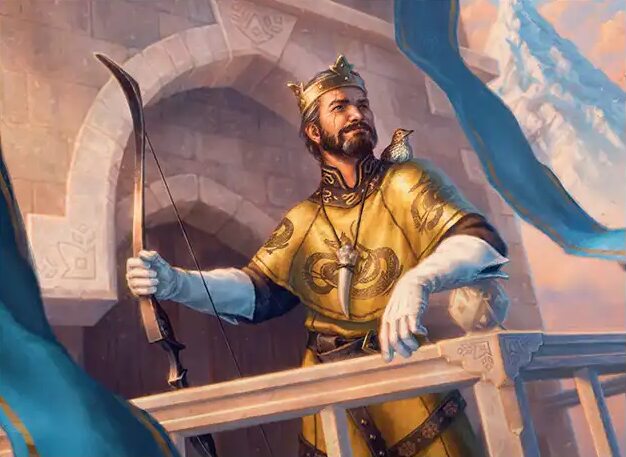
Today we are going to be taking a look at Bard, King of Dale!
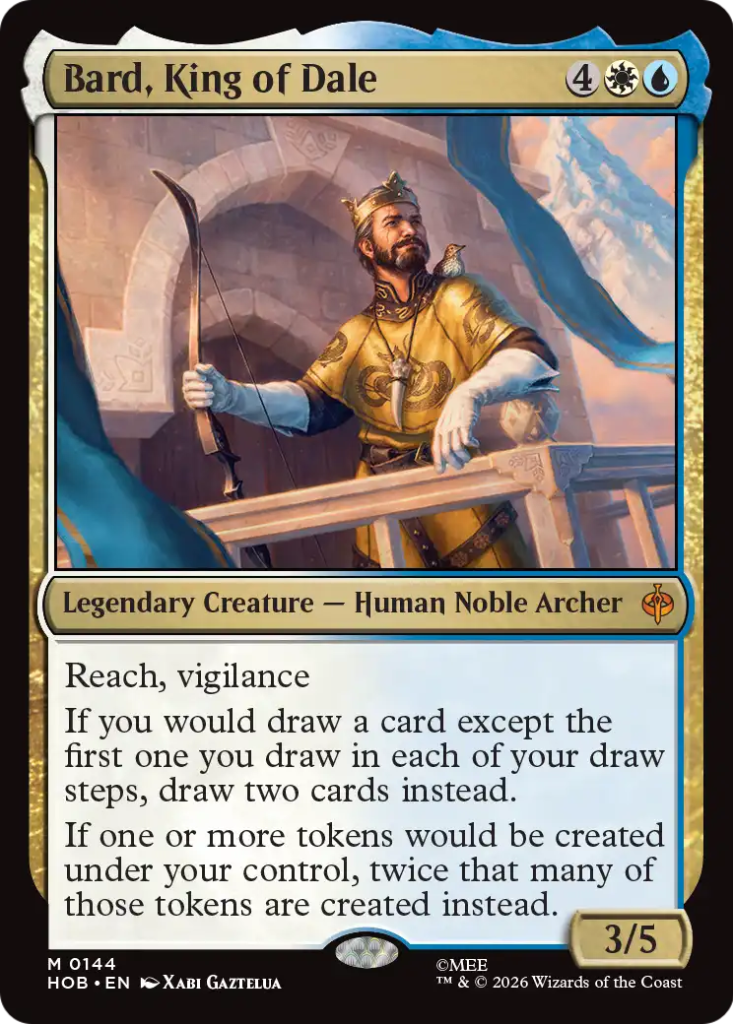
Bard is a six mana 3/5 with reach and vigilance, and if you would draw a card except the first one you draw in each of your draw steps you draw two instead and if one of more tokens would be created under your control the twice that many of those tokens are created instead.
Game Plan
With Bard, the idea is to draw as many cards as possible, as well as get as much value from any tokens that we also happen to make.
While not having a lot of inherent strategy on his own, Bard is a value Commander that can help fuel a lot of strategies because he allows you to draw so many cards and make so many tokens.
Blue doesn’t often get token doublers and white doesn’t have the best card draw, so taking advantage of both of those colors to help facilitate the other can lead to a wide swath of strategies.
Support
Since we want to draw cards and make tokens, those are going to be the primary cards that the deck is going to use.
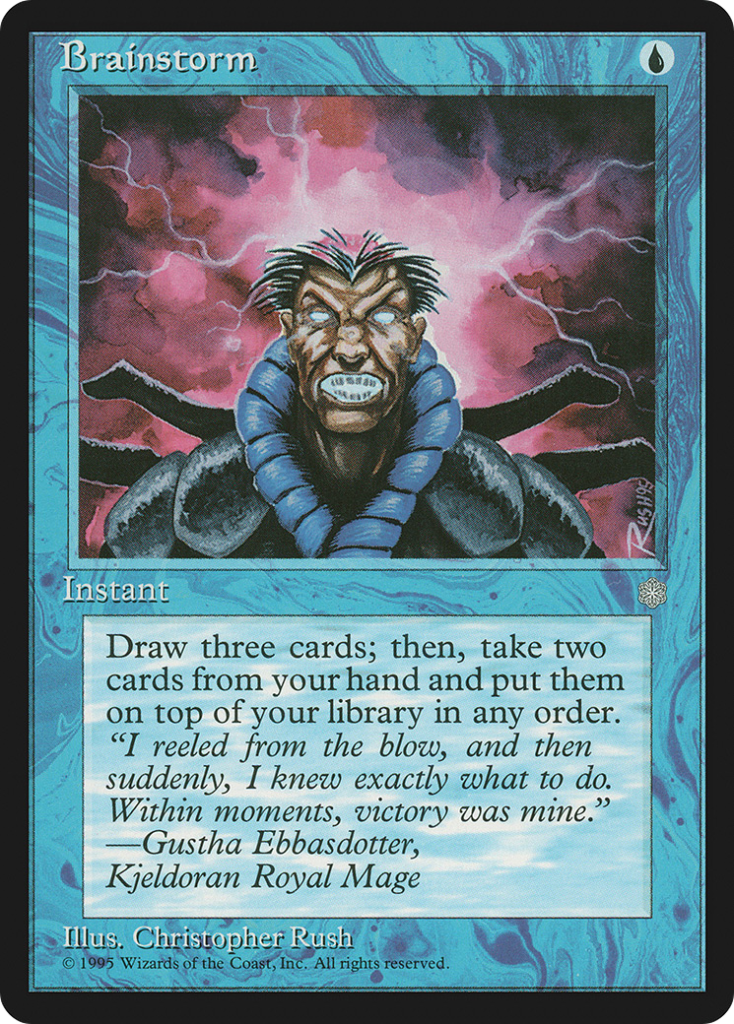
Brainstorm is of course one of the more effective draw spells in the game, being that for one mana we draw three cards and put two cards back on the top of the deck, which if we cast when Bard is in play let’s us draw six cards and put two back.
Cantrips like Opt and Consider become considerably better since they become draw us two cards while also providing the information from a scry and a surveil respectively. We can even lean into some of white’s group hug draw to our advantage, turning a Secret Rendezvous into letting us draw six cards and an opponent drawing three.
Then again we can also use that to our advantage by leaning into a control game plan by having a Narset, Parter of Veils in play in order to limit how many cards our opponents draw from that. If we do lean into a more control type of deck, there is also Archivist of Oghma, which draws us a card and gains us a life whenever an opponent searches their library.
On the token side of things there are a myriad of ways to take it, including creatures with myriad. If you are a more combat focused deck then you can use Legion Loyalty as a way to get a bunch of tokens attacking your opponents because it gives creatures you control myriad.
Ocelot Pride can also get out of hand fairly quickly because at the beginning of your end step, if you gained life this turn, you make a 1/1 Cat token and if you happen to have the city’s blessing then for each token you control that entered this turn, you create a token copy of it, which when paired with Bard can be make you a ton of tokens.
Homunculus Horde is also a way for you to get a ton of tokens from you drawing a bunch of cards because whenever you draw your second card each turn, you create a token that’s a copy of it. With Bard in play one becomes three, then three become nine, then nine become twenty seven, etc.
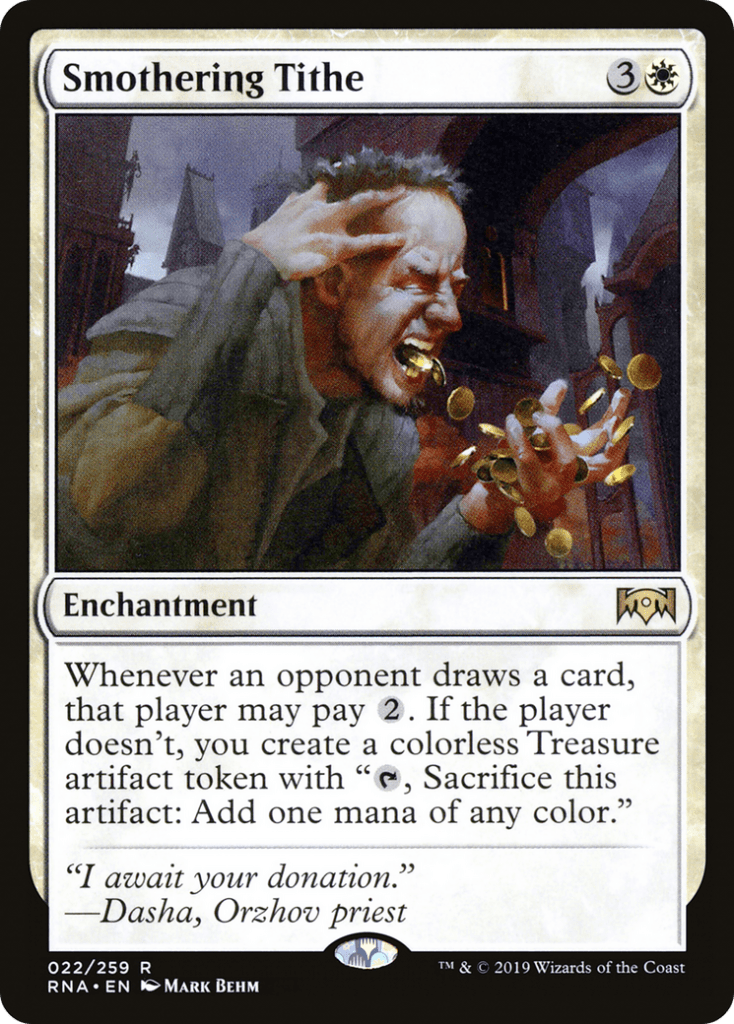
Then of course there are the other elephants in the room in Rhystic Study and Smothering Tithe, which can have you draw a ton of cards whenever your opponents play spells and refuse to pay the 1 and make you a ton of Treasure tokens whenever your opponents draw cards.
These cards are massive ways for you to make so many Treasure tokens that you can use to cast all the spells that you want from all of the cards that you have drawn.
Setbacks
The biggest problem that Bard has however, is that you need to be able to cast him and have him stay on the field long enough to do what you want to do.
White has a decent amount of catch up ramp in effects like Claim Jumper and Knight of the Orchid effects, but the amount of ramp to make sure you can get to a position where you can cast Bard reliably with a way to make sure he sticks is going to be tough, especially the higher brackets you climb.
If you happen to lean into the control plan then you have a better chance at making sure you can get Bard to hit the battlefield and stick around, especially with the amount of card draw you have and how he can snowball Treasure making effects, but having them stick around long enough to do so is where it can be difficult.
The other issue is that with Bard is the issue that a lot of value engine Commanders can bring, and that is tunnel vision. Bard can help you draw a ton of cards, but if they don’t help you win then what’s the point? If you can make a ton of tokens but a board wipe resolves, what do you do?
Value engine Commanders give you a ton of resources, but failing to capitalize on those resources becomes a teaching moment for deck builders. Don’t just have pieces that give you a ton of value, also put win conditions in to make sure that you can make use of the resources you gain from playing Bard.
That is more of a nitpicky critique to be sure and is very much how I personally view value engine Commanders as a whole.
Bracket Rating: High 4 or Low 5
Welcome to the most interesting part of the new rating system, no hard lines to be made.
I think that Bard can be made as an extremely powerful cEDH Commander, however the struggles of getting a six mana Commander in play are what’s keeping me from solidly setting him in Bracket 5. I’m not saying he isn’t fully capable of being a cEDH Commander, it just takes a bit of work.
However, he is still a very strong Commander that can definitely make use of all the free counter spells that are Game Changers, the previously mentioned Rhystic Study and Smothering Tithe, and cheap tutors to control the table to generate a ton of resources that can facilitate a win, which is why the high 4.
Thank you very much for reading, see you all tomorrow!
Peace,
From, J.M. Casual




Leave a comment