Hello everyone and welcome to the Casual Chat!
This is where I pick a topic and ramble on about it because I found it interesting to talk about.
Keeping in theme with card games, at least for the first one, I wanted to talk about Resources in card games, the pros and cons of having them, and why some games may not need them.
What is a Resource?

Starting from the very first trading card game in Magic: The Gathering in the form of lands, a resource in terms of card games is another game piece or tracker that is needed to play your cards.
In Pokémon there are the Energy Cards, in Elestrals you have Spirits, in the Digimon Card Game there is the Memory Gauge, and so on.
Having a resource in a card game is a way to make sure that one player doesn’t immediately have the advantage in playing the best cards in the game and winning before the other players have a chance to play.
To use Magic as an example, you can play one land per turn and play something that costs 1 mana that the land makes, then your opponent does the same and when it gets back to your turn you play your second land to play one 2 mana card or two 1 mana cards, and so on.
The slow accumulation of resources so you can play more expensive cards that are stronger is the idea of having a resource.
In a lot of games there are ways to get more of that resource at once, often referred to as ramp, which allows you to have access better cards a little bit sooner.
It can be in the form of another non-resource card that makes the resource, a card that makes a temporary number of that resource until then end of the turn, or allows you to get a lot of that resource in a more long lasting form.
Resources are not always cards.
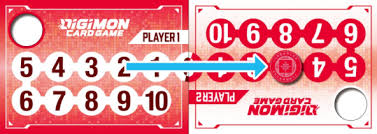
Like I said earlier there is the Memory Gauge system in the Digimon Card Game. The way that system works is that there is a track going from 10-0-10 for each player on each side.
In order to play cards, the active player moves a tracker from wherever they are at closer to 0, and if it goes past 0 into 1 or higher on the opponents side, the active player’s turn ends and the opposing player’s turn starts.
This turns the game into a back and forth ordeal where you can play your higher cost cards immediately, but once that card resolves you give your opponent a lot of Memory to use to play their cards before it gets back to your turn.
Keeping Pace

Now the ideal reason why most card games have a resource system in place is to make sure that the game can go an ideal length and not finish too fast.
People who make card games want people to play those games, so having a resource system that acts as a speed limit can make sure your players can play the game and enjoy it.
Getting access to one resource at a time can be frustrating to some players, but it makes sure that the everyone has a chance to play their cards and feel like they did something to impact the game.
Another reason to have a resource system in a game is to act as a balancing tool for the game designers.
If you have a card that immediately wins the game that takes one resource, no one would play the game and the ones that do would just play that card and hope to draw it, whereas if you have it cost a bunch of resources then it may never see play.
The designers can tweak and play with the resource cost to see what is the acceptable cost of the card to make sure that it sees play while also being fair to use.
For example, in Magic the card Lightning Bolt costs one red mana to deal 3 damage to any target. This is a very cheap effect and a very good effect, so the designers knew that they had to balance later cards around it.
Shock costs the same as Lightning Bolt but only deals 2 damage to any target, and that is still good, but not as good as Lightning Bolt and something that Magic designers are more willing to put into Standard sets than Lightning Bolt.
If a card game has resource types, then the balancing can go even further and allow for additional effects while still being balanced.
Lightning Helix is a card that costs one red mana and one white mana that deals 3 damage to any target and you gain 3 life.
One more mana expensive than Lightning Bolt to deal the same amount of damage, but has an additional effect in gaining life which can be useful in some strategies.
There are, however, some issues with resource systems like Magic.
Flood and Screw


One of the more common complaints of having a resource system mostly comes from systems that have specific resource cards.
Sometimes you draw too many of that resource, often referred to as flood, or not enough of that resource, often referred to as screw.
If you flood on the resource, then you have too many of the resource in your hand and are unable to play your other cards because you don’t have any of the non-resource cards to play.
If you get resource screwed, then you don’t have enough of the resource in your hand and are unable to play your other cards because you don’t have the resources available to play those cards.
Having cards as a resource in your main deck is a holdover from Magic, and while it works well enough in Magic because they’ve had 30 years to make it more palatable with things like fetch lands, ramp, mana rocks, and discard outlets, it still has its own problems with flooding and screwing.
Games that do it similar to Magic have a hard time when they are starting out because they need to have ways to make dealing with an excess resource or not enough of the resource, which is why a lot of games have done a resource system differently.
Alternate Sources
With people who don’t like how Magic manages its own resource system, there have been a variety of ways that games have decided to having a resource system work.
The game Elestrals has its resource system, Spirit cards, in a separate deck where you can use them to play your cards, but it also doubles as your life total where if you attempt to use a Spirit or an opponent attacks your Spirit deck and you have no more Spirits, you lose the game.
A separate deck is not the worst idea because it dodges the problem of having flood and screw because you don’t draw the resource cards in your hand.
You also have games like Lorcana, where some cards can be placed face down in your Inkwell to be used as a generic resource, regardless of what color of cards you’re playing. You balance deck building with cards that can be Inked with cards that cannot.
Having cards double as a resource is interesting because of the deck building challenges that come with it, and you can use more resource intensive cards that you can’t play in the early game to play your low resource cards and swap as the game progresses.
Wizards of the Coast used this idea much earlier with their now Japanese exclusive card game Duel Masters, where every card can be used as a resource when placed upside down in your mana zone.
Then, as mentioned earlier, the Digimon Card Game uses a tracker that both players use to track the amount of Memory used.
Having a tracker has its own benefits and challenges depending on if it’s an individual tracker or if it is a shared tracker, but having something visual that isn’t a card to track the resources can be useful for newer players to not worry so much about deck composition of resource cards to non-resource cards.
There is no right or wrong way to have a resource system, so long as the rules make the resource work and the game can function, then there shouldn’t be much of an issue.
But what if your game didn’t have a resource system like Magic or Digimon or Lorcana?
The Garnecia Elefantis in the Room

Yu-Gi-Oh! is one of the big three of card games, along with Magic and Pokémon, and unlike the other two card games and many others, it doesn’t have a hard resource system.
Rather, the cards themselves act as the resource where you play a card to play other cards rather than playing a resource to play a card.
The best way I can describe how modern Yu-Gi-Oh! is played is imagine if each player builds a deck that functions like a computer program where one piece activates another piece which activates another piece until you reach an end board, the pass the turn for your opponent to do the same if you cannot win on that turn.
Your opponent may also play cards on your turn to interact with yours to disrupt your game plan, and if you cannot respond in kind then your program ceases to work and you need to find a way to restart to make sure your opponent doesn’t win.
It is a game filled with complex interactions and long combos that can seem daunting to new players.
While many would see this as a criticism of the game because of the lack of hard resources to slow the game down, many players see that as a benefit.
If both players are not hampered by a hard resource like lands or mana or Memory, then how can you win the game before your opponent can play their cards? What is the most insane combination of cards to win the game or what is the most efficient way to develop a dominating position over the opponent?
It’s also important to note that Yu-Gi-Oh! does have other resources, just not the same ones that other card games do.
For example, each player gets one Normal Summon per turn, some cards need effect costs to be paid to play, and there are strict timing windows where the words “if” and “when” can determine if a card can miss the timing and not being able to be played.
Even with these limitations, Yu-Gi-Oh! for the most part is seen as an all gas no brakes sort of game, and that has its appeal to a lot of people.
Yu-Gi-Oh! was my go too game for the longest time before I started playing Magic, and it is a different mind set to go into the game than slower games.
The issues come with the sake of power creep.
Since many cards don’t need a hard resource to play, then the players will only play the best cards and to get them to play new cards, they need to be better than the old cards.
Without the brakes that a hard resource system has, then cards get significantly stronger as time progresses, making once great cards become average then useless, unless they are so broken that they need to be banned or limited.
Another issue is getting new players into the game. If a player who played Yu-Gi-Oh! in the past tries to play now, the once slower game where it took multiple turns to get a foothold, has been replaced with a game where interaction is almost free and a player can win on turn zero or turn one if they happen to draw well.
That can be daunting to a new player, especially with the amount of text on modern Yu-Gi-Oh! cards where many cards have multiple abilities that can be used at different times, for a different cost, and a certain number of times per turn and per copy.
Now this begs the question…
Resource or Free?
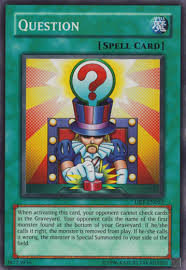
Do card games need a resource system?
This is a difficult question because it depends on what the game is wanting out of the players.
If you want the players to slowly accumulate resources, where they need to be careful in using their resources while also being proactive in using them to keep playing, then use a hard resource system like Magic or Pokémon.
If you want more of a casual crowd where you still want resources, but don’t want people to deal with having too many or not enough resource cards, then go the route of Elestrals or Lorcana.
If you want back and forth gameplay where players need to be mindful of the resource because they could potentially give too much of that resource to your opponents, then a tracker can be the right for you.
If you want a fast paced, pedal to the metal game where you want your players to construct highly efficient decks that can interact with each other for a minimal cost, then having no resources is the way to go.
As I’ve grown older I have come to appreciate the slower games like Magic, where the challenge of making a deck comes from balancing the number of lands and other cards in the deck to make sure I draw what I need when I need it.
While I do still enjoy Yu-Gi-Oh!, it would be disingenuous of me to say that having a fast paced system where cards do a thousand things for little to no cost has lost some appeal to me, where I now enjoy slower archetypes and play patterns.
Having attempted to design several card games, I have found that I do like having some resources in the game, but not hard resources like Magic.
There is a system that I do like that I’ve been toying around with, but that’s something for another day (and more testing on my end to make work).
Thank you for reading, see you all next week for the next Casual Chat!
Peace,
From, J.M. Casual

 J.M. Casual Blog
Leave a reply to 5 on Friday 13/12/24 – No Rerolls Cancel reply