Hello and welcome to Daily Commander!
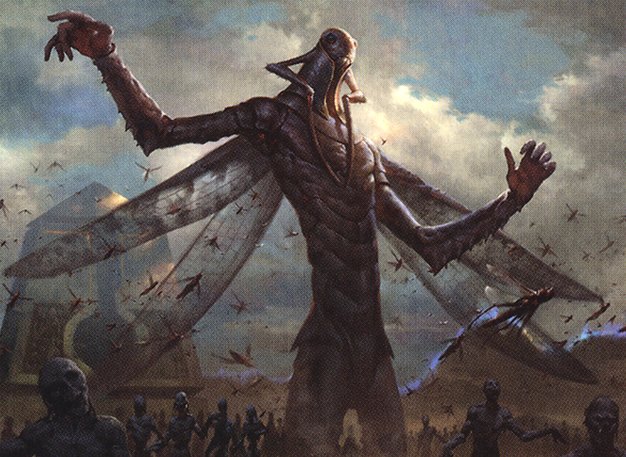
Today we are going to be talking about The Locust God!
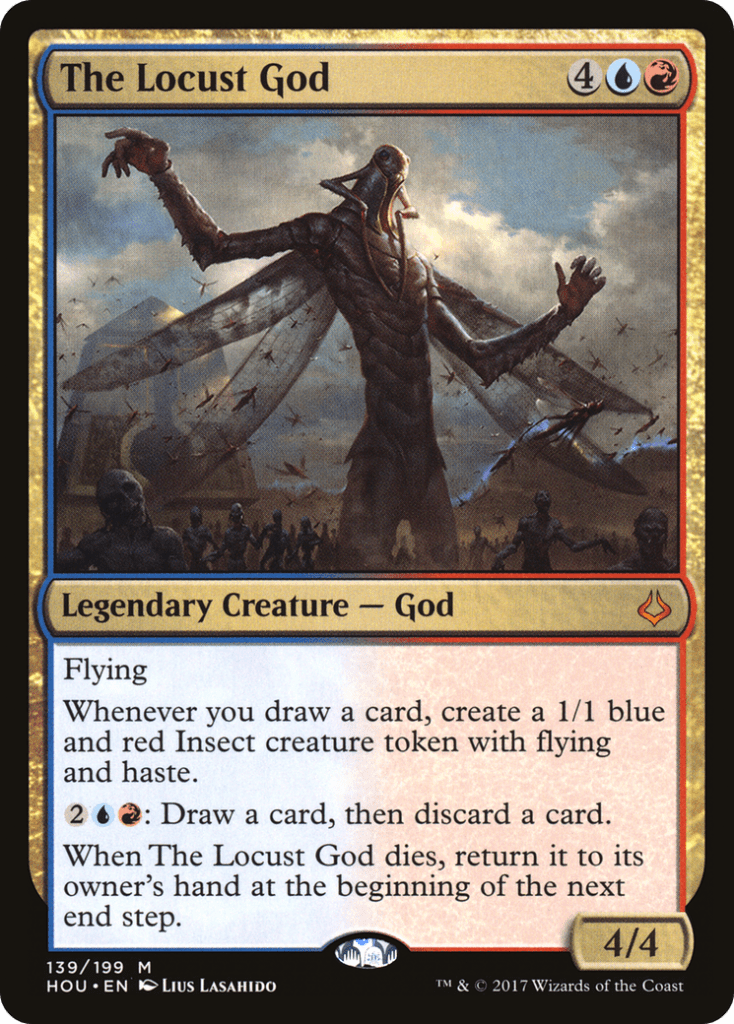
The Locust God is a six mana 4/4 with flying, whenever you draw a card you create a 1/1 blue and red Insect creature token with flying and haste, for two a red and a blue you draw a card then discard a card, and whenever The Locust God dies, you return it to its owner’s hand at the beginning of the next end step.
The Locust God wants us to draw a lot of cards so we can make a lot of Insects that can attack and win, that much is clear. The question is how do we make it so we can draw enough cards to make enough Insects to win us the game if we swing with all of them at once.
While difficult to do, it isn’t completely impossible if we manage our resource correctly and make sure that we can cast a bunch of ways to make us draw a bunch of cards so we can get a bunch of Insects to deal a bunch of damage..
The first thing we need is a way for a ton of burst draw, which usually means wheels.
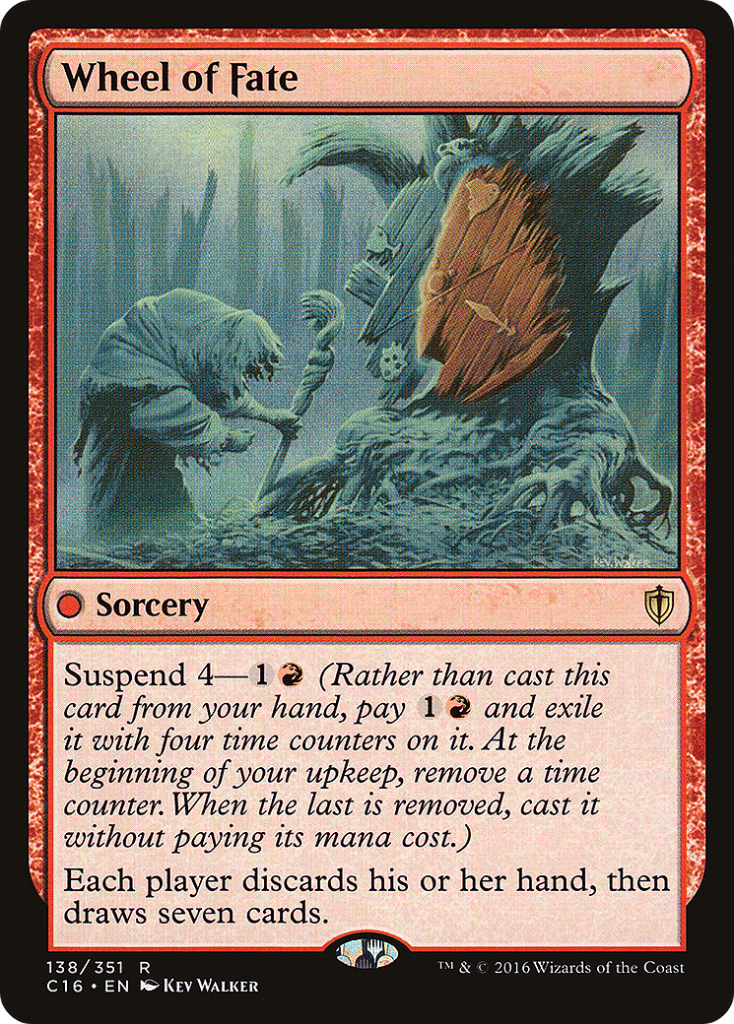
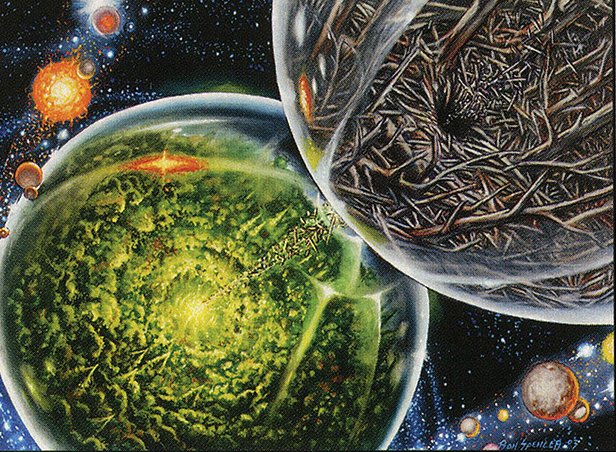
Wheel of Fate is a pretty decent option for us to play early enough with Suspend while also being able to ramp up to get The Locust God in play so we can have everyone discard their hand and then everyone draws seven cards.
Since a lot of wheels tend to be symmetrical, and depending on our power level, we can also mitigate the fact that we are also helping our opponents out by playing Narset, Parter of Veils as a way to prevent our opponents from drawing too many cards per turn, while also having the utility of being able to put an additional nonland noncreature card from the top four cards of our library to our hand.
Whirlpool Warrior is a creature I had no idea existed but when it enters we shuffle our hand into our library and then draw that many cards and for a single red mana and sacrifice it, we can have it so that every player shuffles their hand into their library and then draw that many cards, which is a nice way to get a double wheel for us while not losing too many cards.
If we or an opponent happens to have a lot of cards in hand, then we can also use Windfall, which has every player discard the cards in their hand in order to have each player draw cards equal to the greatest number of cards a player discarded this way.
We can also go insane on the card advantage value by using Teferi’s Ageless Insight, which if we would draw a card except for the first card we draw on our draw step, then we draw two cards instead, which with the amount of draw we have in our decks it is not impossible that we draw more than three cards each turn.

The next thing that we need are ways to make sure we don’t accidentally deck ourselves out.
Commit is a decent way for us to bounce a spell or a permanent to its owner’s library, but the part we are looking our for is the Aftermath sorcery of Memory, which can only be cast from the graveyard, which has each player shuffle their hand and graveyard into their library and then draw seven cards, which not only restocks our library, but makes seven new Insects.
Midnight Clock is a mana rock that adds blue mana, but also gets an hour counter at the beginning of each upkeep or for three mana and when it does we shuffle our hand and graveyard into our library and then draw seven cards.
Feldon’s Cane can tap and exile itself to shuffle our graveyard to our library, Reminisce can have target player shuffle their graveyard into their library, Learn from the Past does this and draws us a card as well, and Mnemonic Nexus has it so every player shuffles their graveyard into their library.
Finale of Revelation is an interesting version of this effect because it lets us draw X cards, but if X is ten or more then we shuffle our graveyard into our library, draw X cards, untap up to five lands, and we have no maximum hand size for the rest of the game.
If we want to have a consistent way to wheel cards while also not having to discard them, we have access to Arjun, the Shifting Flame which has it so whenever we cast a spell we the the cards in our hand on the bottom of our library in any order and then draw that many cards, which helps keeps cards in our library while also wheeling our hand to make more tokens, which we can also accomplish with Mindmoil being an enchantment version of this effect.

While there are ways we can turn our draws into damage, the way that we are aiming for this deck to win is win our Insect tokens.
With that being the case, even if we have a lot of them in play, they are still 1/1 creatures at the end of the day, so we need to boost them up. Shared Animosity is the sort of card we are looking for since whenever a creature we control attacks, it gets +1/+0 until end of turn for each other creature that shares a creature type with it, which will turn a bunch of 1/1’s into a deadly threat.
Crown of Fury is an interesting version of this effect since it is an Aura that gives the enchanted creature +1/+0 and first strike, but we can also sacrifice it to give the enchanted creature and any creature that shares a creature type with it +1/+0 and first strike until the end of turn, which while not the biggest boost still doubles the damage we have available.
Frostcliff Siege is a modal enchantment that lets us either choose Jeskai to have it so whenever one or more creatures we control deal damage to a player we draw a card, but more favorably if we choose Temur we give creatures we control +1/+0 along with trample and haste. While the haste is redundant, what matters is giving the Insects we control trample for any potential blockers our opponents have.
If we want to be relentless and any boosts we give won’t give an immediate win, we can use Breath of Fury, which is an Aura that has whenever the enchanted creature deals combat damage to a player we sacrifice it to then attach Breath of Fury to a creature we control and if we do we untap all creatures we control and have an additional combat phase.
With enough Insects and making sure we have the enchanted Insect attack an opponent with no viable blockers for it, we can have a chain of multiple combat steps that will win us the game with our Insects attacking over and over again.
The Locust God is a value and engine Commander that requires us to draw a ton of cards in order for our strategy to be viable, and while having a variety of ways to deal 1 damage to our opponent for each card we draw can definitely shorten the game, I find it more interesting and fun to focus on the Insects and have them be the win condition.
The difficult thing is that we need to make sure we can cast The Locust God, and make sure that they stay in play, which we can do but with how often we are wheeling our hand it becomes significantly riskier because we may not draw the cards we need to protect The Locust God, and we also don’t have infinite mana to cast things, which may mean we make a bunch of tokens, pass, and then get our board wiped.
The best thing is that The Locust God has a way to stay decently cheap by returning to our hand when it dies, and we can cast it again to work on getting the ball rolling again. The deck should have a lot of restock and draw redundancy for us to get the ball rolling again.
Thank you for reading, see you tomorrow for the next Daily Commander!
Peace,
From, J.M. Casual


 J.M. Casual Blog
Leave a comment