Hello and welcome to the Casual Chat!
Today I wanted to talk about an aspect of card games that comes up from time to time, and that is the idea of errata for cards.
For those unaware, in TCG’s the term errata means to change the text of the card to have it say or potentially do something else.
There are several types of erratas, why companies errata cards in the first place, and the general perception of erratas that I think would be interesting to discuss today.
Let’s get started!
Types of Errata
While all errata can change the text of the card, what I think is most important to distinguish is that there are several types of errata and they all serve different functions.
First there is what I like to call clarification errata. This is the type of errata seen in games that have been around for a long time and want to update what a card says while not directly changing it.
Think of something like Serra Angel from Magic the Gathering. Originally the text of the card said “Flying, Does not tap when attacking,” and any modern printings of the card say “Flying, vigilance.” because the keyword vigilance did not exist when Serra Angel was printed in Alpha.
This also applies to have a card read like a modern card for functionality reasons like Wrath of God which said “All creatures in play are destroyed and cannot regenerate,” which now says “Destroy all creatures. They can’t be regenerated.” Functionally the same, just parsed into modern language for the game.
We then have what I call simplification errata. This is a type of errata that removes or changes a card that has an card type that is no longer supported or is changed slightly that does have a minor effect in how it is played.
This applies to the old interrupt card type that used to be in Magic being changed into instants, which does affect the game in that now all instants can be played at any time they could rather than interrupts being the only way to play after instants or other cards being played, but not too much functionality is lost.
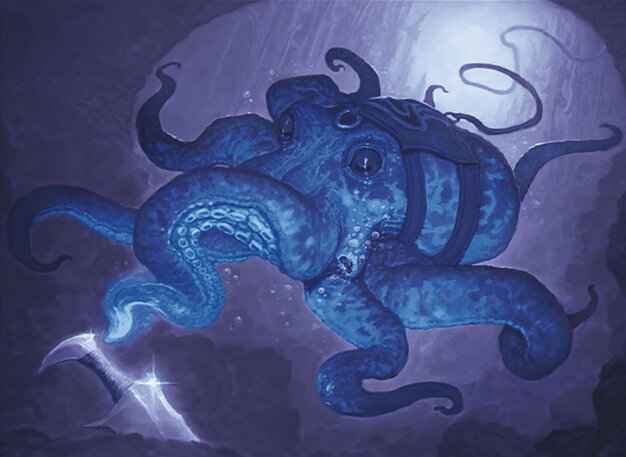
Where it gets a little dicey is when there are card type erratas that do change how cards are played. For example in Magic Cephalids became Octopus, Naga became Snakes, and Viashino became Lizards fairly recently, and all of this was because Wizards of the Coast wanted to help streamline their creature types.
This in turn will allow certain cards to be played in more general typal strategies where they wouldn’t have been able to be played before, which in general is a good thing, but some people have pointed out that this is not great for having the flavor of these unique creature types in the game, but we’ll talk about that a bit later.
The last major type of errata is what is known as functional errata. This means that the original card text has been changed to a different effect. To keep with Magic examples, think of the Companion mechanic, which originally read that a card with Companion could be cast from outside the game to now needing three mana to be put into your hand and then can be played like a regular card.
If you want more examples of functional errata, look no further than a lot of cards from Yu-Gi-Oh!, of which many formerly banned cards were changed so that they can be played and not be broken. More often than not a hard once per turn clause is added to a card that used to be abusable so that they can’t loop indefinitely anymore and become almost unusable.
Why Have Errata?
The reason why cards get an errata really depend on the nature of the errata. For clarification errata its more so done in order to make sure that a card does what it says or simplifies the text without changing the card, and this type of errata is never really one that people complain about.
The ones that people do have an issue with are simplification errata and functional errata.
The reason why simplification errata exist is to streamline the types of cards that the designers and developers have to deal with in the future. In some cases this isn’t much of an issue because if it’s for a card type that isn’t used anymore than no one really has much of an issue.
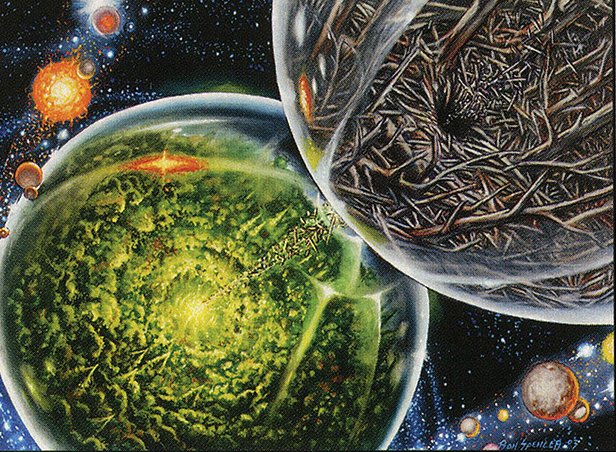
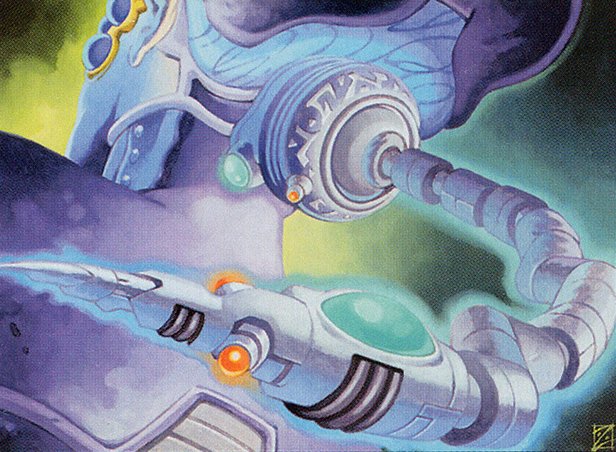
Where it does become a problem is when there is much more of a change than expected. For example, in Magic, there used to be three artifact types called Mono, Continuous, and Poly in which that a Mono artifact had to tap to use its ability, Continuous artifacts always had their effect active, and Poly artifacts had an activated ability that didn’t need to be tapped.
It’s also important to know that back in the day, if an artifact was tapped then it had its effect turned off, which wasn’t much of an issue but it did have a major effect on certain cards like Winter Orb and Howling Mine, which when that rule was removed but the lines “As long as ~ remains untapped…” being added to those cards, they have become cards associated with some degenerate play.
Also, as mentioned before, when creature type erratas become prevalent it can help homogenize a game and lose a bit of its identity. When Cephalids came back in Streets of New Capenna people were surprised to see them since they haven’t made an appearance in years.
Now that they have been erratad into being Octopus, people became disappointed because a unique Magic creature type had become lost after having recently just come back.
I understand both sides of the argument in that keeping unique creature types in the game help give it more of an identity, but I also understand that game designers want the cards to be played, and even if it erases some of the flavor, one of the better ways for some cards to be played is if they were part of a better supported creature type.
Functional errata is bar none the most contentious type of errata because not only does a card change completely, but unless there is a reprint of that card, people may not be aware that a card has completely changed.
Going back to Companions, the original printings of Companions were the only printings of the cards and carried obsolete rules text until one Companion, Lurrus of the Dream-Den received a printing in the Pioneer Challenger Decks, and the others wouldn’t have printings with the correct errata text until March of the Machine, three years later from their original printing.
While Magic doesn’t do a lot of these sort of erratas, this is still a very long time to not have proper errata text for these cards. To give Yu-Gi-Oh! credit, often when they errata cards they usually have the erratad cards get a reprint fairly soon with the correct text.
Should We Errata?
However, this all leads to the big question in that should cards get functional errata in the first place?
I’m of two minds on this because on the consumer side I see the issues in that if I had an older version of a card and it no longer functions the way it says anymore, than there is a chance I play the card incorrectly.
Now I am plugged into the TCG community fairly well so I have the habit of making sure any cards I do play are up to date or I am aware if they have had an errata, but that isn’t always the case.
There are plenty of people who have a bunch of old cards and want to play them but are not likely to be made aware that those cards may not do what they say anymore and that they need to either buy a new version of the card, if it exists, or just know how a card has changed.
On the designer side of the issue I can also see that some cards were not intended to be as powerful as they are. I’m positive they understand that people get angry that cards change and the cards they own may no longer do what they say they do anymore, but if it makes a card more fair to use is it a bad thing?
Would I take a slight PR hit of a card being changed to be more fair than a bigger PR hit of a card being too broken because of an oversight? That is a difficult question that I can’t really answer.
I can say that this is more of a physical card game issue. Digital card games have the benefit of being digital so that if a card changes on the digital client then everyone who has that card knows that something has changed.
This may cause a different set of problems with regards to power creep, but that’s a topic for another day.
Thank you for reading, see you next time!
Peace,
From, J.M. Casual
 J.M. Casual Blog
Leave a comment