
Hello and welcome to the Casual Chat!
Today I wanted to talk about interesting rules interactions in card games! This came about when talking to a friend of mine about how a certain rules interaction worked and me realizing how much I love these weird rulings.
Weird rulings often come about because the designers of the game often are making cards years in advance and cards often change dramatically from how they started, changed right before the set releases and enough playtesting was done, or interacts with an older card that never saw play and was ignored until players realized the weird interaction and it became rampant.
I’m just going to focus on one example from the big three card games today; Magic the Gathering, Pokémon, and Yu-Gi-Oh! to keep things simple, but if you know of any other weird rules interactions let me know and maybe I’ll revisit this topic in the future.
Until then, let’s get started!
Bloody Saga
There are so many interactions in Magic that I’m sure I can do dozens of blogs on that alone, but I wanted something that is a little more simple and a little more niche since it may not appear often.
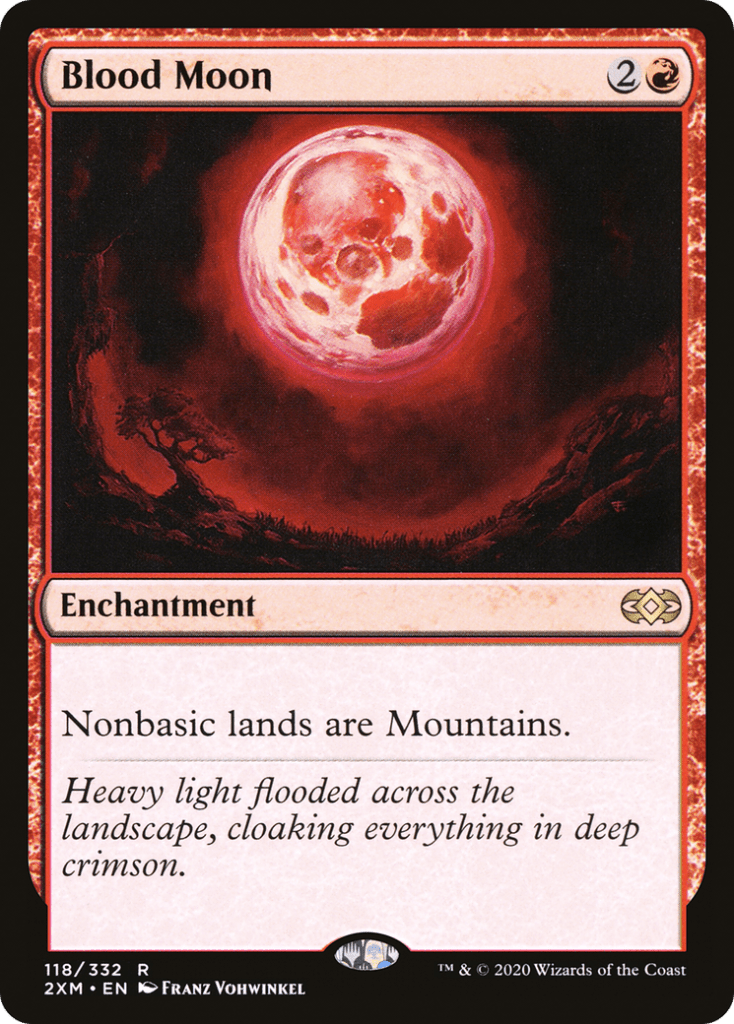
To start we have the ever so hated card Blood Moon, which turns all non-basic lands into Mountains. A simple effect that is made to punish people who play too many non-basic lands that annoy people who play a bunch of non-basics in their multicolor decks. Annoying, but manageble.
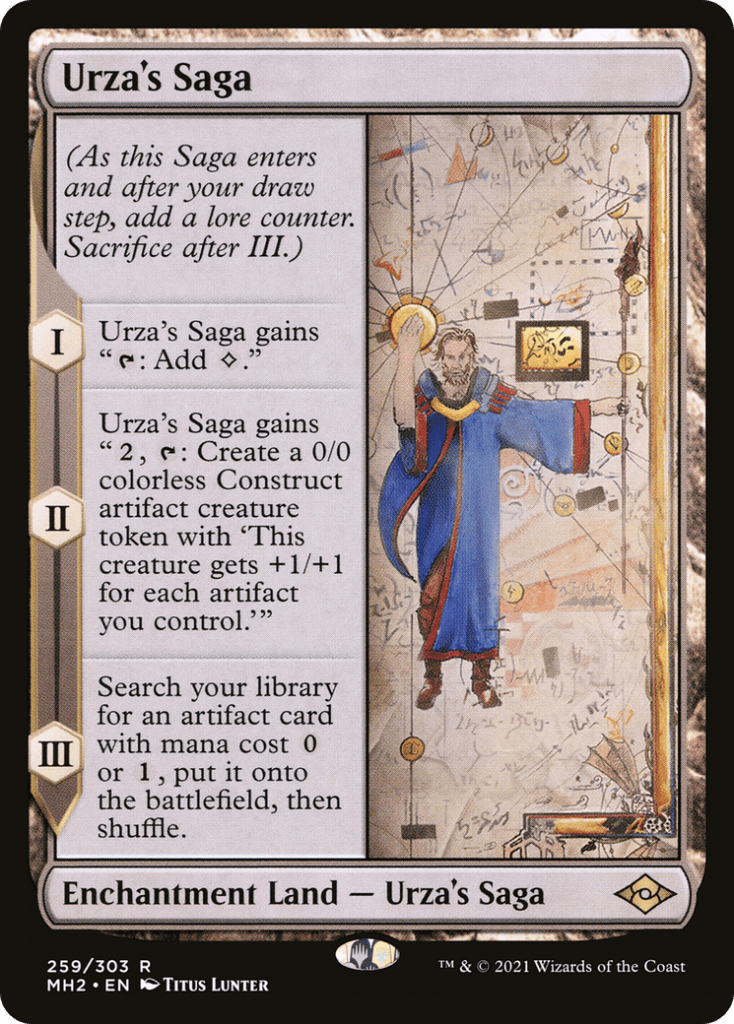
Urza’s Saga is a land that also happens to be a Saga, meaning that when it is played and after our draw step it adds a lore counter to gain another effect, and once it reaches its final chapter it is sacrificed. Urza’s Saga is a powerful land because it can make a big body in artifact decks and can tutor a cheap artifact into play. Strong, but temporary.
What happens if both are in play at the same time? Well since it is a non-basic land it becomes a Mountain, but it also remains an enchantment and a Saga. The abilities are removed, but it still is a Saga with no abilities…for all of about a second because since it has no abilities and some lore counters it has reached its limit and sacrifices itself.
No matter how many lore counters are on it, state based actions check if the maximum amount of lore counters has been reached and since the Saga now has zero chapters, any lore counters exceeds the maximum number of zero and thus the land is destroyed.
Indestructible Balloon


Since my knowledge of the Pokémon TCG is quite limited, I had to look for an effect that I understood, and this one is pretty interesting.
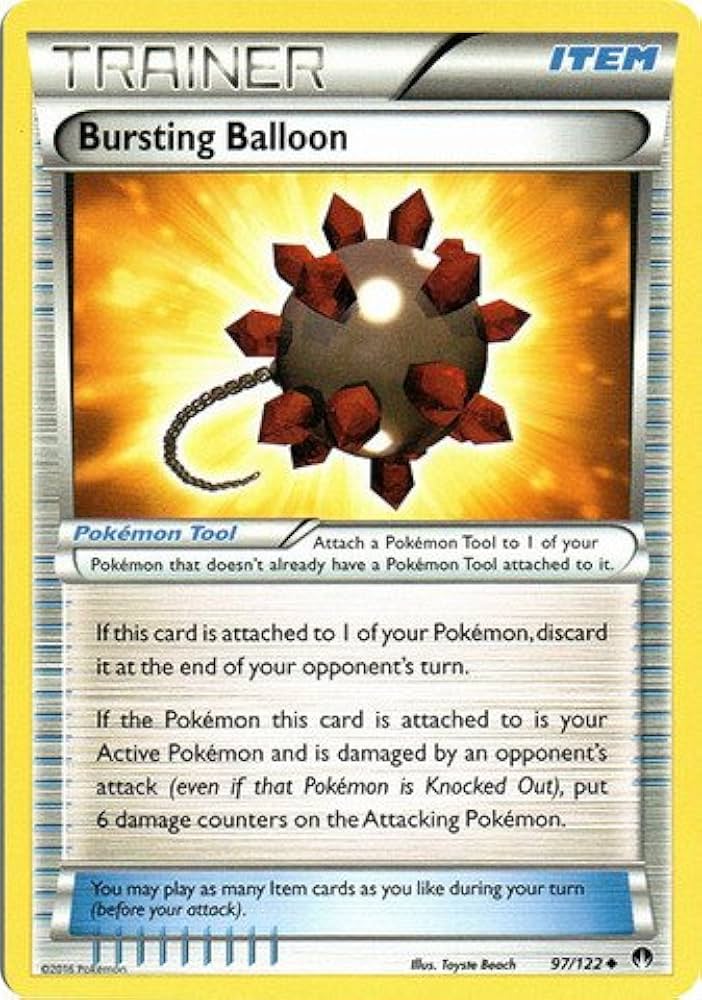
First we need Yveltal in play, which has the ability of Fright Night, which has it so long as it is our Active Pokémon, each Pokémon Tool has no effect. Next we need to attach a Bursting Balloon on it, which discards itself at the end of our opponents next turn, and if it is attached to our Active Pokémon and that Pokémon is damaged by an opponent’s attack, it puts 6 damage counters on the attacking Pokemon.
The crux of this interaction is Hex Maniac, which turns off all abilities of each Pokémon in play, in their hand’s, and in each discard pile until the end of our opponents turn.
This will turn off Yveltal’s ability off, the Balloon’s on and if an opponent attacks our Yveltal at all, they get 6 damage counters. Then at the end of the turn, Hex Maniac’s ability ends, which turns Yveltal’s ability on again and the Balloon doesn’t get discarded since it’s ability turns off.
From my understanding this means we get additional uses of the Balloon if we can reliably turn off Yveltal’s ability consistently, which is a neat way to get additional uses of a strong card that is intended for a one time use.
A Legendary Umi Warrior


The last one is a funny ruling because it is based on how a card is worded and the outcome of the result being hilarious.
A Legendary Ocean is a Field Spell that gives all Water monsters on the field 200 ATK/DEF and reduces the level of all Water in play and in the hand by 1. This can make higher level Water monsters easier to summon or be used for XYZ plays and is generally a solid card for a Water deck. The interesting thing comes with the rules in parentheses that have the card always be treated as Umi.
Umi is another field spell that has some interaction with other cards for bonus effects, but this is miles better than Umi because of what it can do for you. Where the funny thing comes in is that no matter where the card is, it is treated as Umi.
So then comes a card called Warrior of Atlantis, a card you can discard to search for A Legendary Ocean and put it into your hand, which is a great effect for a Water deck to get what you need to make your plays.
However, technically speaking, A Legendary Ocean does not exist in the deck. It is always treated as Umi, even when in the deck. While some cards change their name when they are in play or in the graveyard or even in the hand or deck, there are very few cards that are treated as another card always.
This used to mean that you couldn’t even include the original Umi in the decks that had A Legendary Ocean, which counted as Umi in deck building and you were under the maximum of three per deck, but I am not sure if that rule still applies anymore.
In any case, the way that this ruling was resolved was Konami saying that this interaction just works, while by all technicalities it shouldn’t. It’s hilarious to me that despite them wanting to have a card that searched for another card, a very common effect in the game, it technically shouldn’t based on the language of the game only works because the company says it does.
In Conclusion
This was only a small look at the plethora of weird and interesting rulings in the three most prominent trading card games.
These games have plenty more weird card game interactions, and there are other card games out there that also have weird rulings, so if you want to see more of these, comment and let me know what other weird interactions exist in any card game of your choice and I may revisit this topic again in the future!
See you all next time!
Peace,
From, J.M. Casual
 J.M. Casual Blog
Leave a comment