Hello and welcome to the Casual Chat!
One of the more interesting things in Magic: The Gathering is the color pie. This aspect of the game defines how certain cards are made, what those colors can do and what they cannot do.
The purpose of this is to make your choices matter, because if every color in Magic can do the same thing, then why would you play different colors in the first place?
This is what helps Magic keep unique in its identity and it is something that I would like to talk about, talking about its strengths and weaknesses.
Overview
To give a bit more context on what the color pie is, when you look at the back of a Magic card you see the five colors of Magic making a circle, with white on top followed by blue, then black, then red, and finally green.
Each color does something that the other colors can’t do or what other colors can only sometimes do. For example, white is the best at life gain, blue is the best at counter spells, black is the best at killing creatures, red is the best at burn damage, and green has the biggest creatures as the briefest of examples.
What makes the color pie different is also that it defines what the colors cannot do. For example, white is not the best at card draw, blue doesn’t really kill creatures, black has a hard time dealing with artifacts, red has a hard time dealing with enchantments, and green can’t deal with creatures well either.
Pros
There are several pros to the color pie.
It incentivizes players to mix and match what colors they play. If you like playing green, but want to make sure that your creatures can attack as soon as they come in then you play red because its the color that can give haste. If you like blue but you want to make sure that your opponents don’t have cards in hand to make sure you can play your best cards, you play black since its the primary discard color.
When there are cards that are in multiple colors, you can get the effect of one color while having the benefit of the other. For example, you can play a white and blue counter spell, which is primarily a blue effect, but get the benefit of exiling the card instead of putting it in the graveyard, which leans more into white.
You don’t even need to stick to two colors, you can also play all five colors if you want. This, however, is not always the best strategy because in order to make sure you have access to all five colors, then you need to make sure you have ways to produce mana of that color.
The best balance is either two or three colors, depending on the format and access to mana and that seems to be the ideal number.
Cons
There are, as with most things, issues brought about with the color pie.
One of the biggest issues is that there are effects that should be available to each color, but some colors are the only ones that have greater access to those effects.
The biggest example for the longest time was card draw, which was primarily in blue, and over time that made other colors struggle with keeping up with blue’s efficient card advantage.
While green and black could manage fine, red and white struggled for the longest time, white especially. Things have gotten better over time, and while white can draw more cards than it could in the past, it still isn’t the best, where it makes sense to be weak at but it shouldn’t be unable to do so.
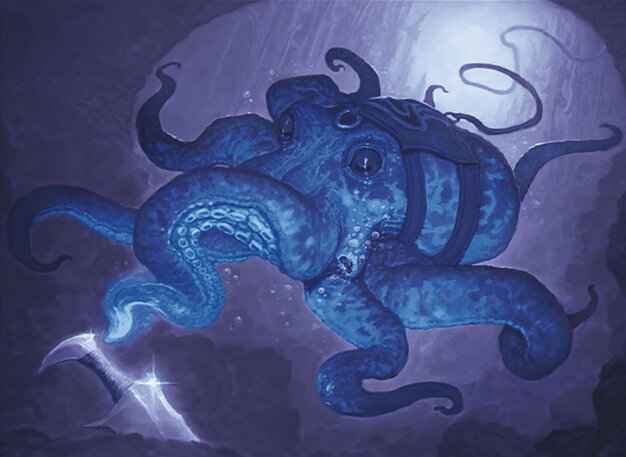
Another issue is when a card breaks color pie, and people latch onto it being something that the color can do now and forever. For example, Pongify is a creature destruction spell in blue, which is something that it really shouldn’t be able to do and is acknowledged as a color pie break.
This also means that when colors get new access to certain effects, people complain that its a break in color pie, despite Wizards of the Coast saying that it is something that they are opening up for the color.
We say this most recently with the release of Withering Torment, which is a black card that can destroy an enchantment or creature, which black has been able to do more recently. People nonetheless still made a fuss when the card was revealed, some people saying that it isn’t something black should do and other people saying that it is something it should do and that people were overreacting.
In any case adding something new that the colors can do is something that is very difficult to do if it isn’t a brand new mechanic.
In Conclusion
The color pie is an interesting aspect of Magic that makes it a unique game. Having to decide which colors to play and figuring out how to balance what they can and can’t do is a fascinating aspect of game design in my opinion.
Of course there are issues, but what the color pie does well in is making sure that a single color can’t do everything at once. There are times when colors are stronger than others, but over time and formats that changes as new cards and mechanics get released.
I do think having a “faction” aspect to a game is interesting, and for a future Casual Chat something that I would like to discuss.
Until then, thank you for reading, see you next time!
Peace,
From, J.M. Casual


 J.M. Casual Blog
Leave a comment